Test Obituary no. 4 – The Atomic Unit of Creativity
Black Holes and Revelations
“Events are the atoms of experience.”
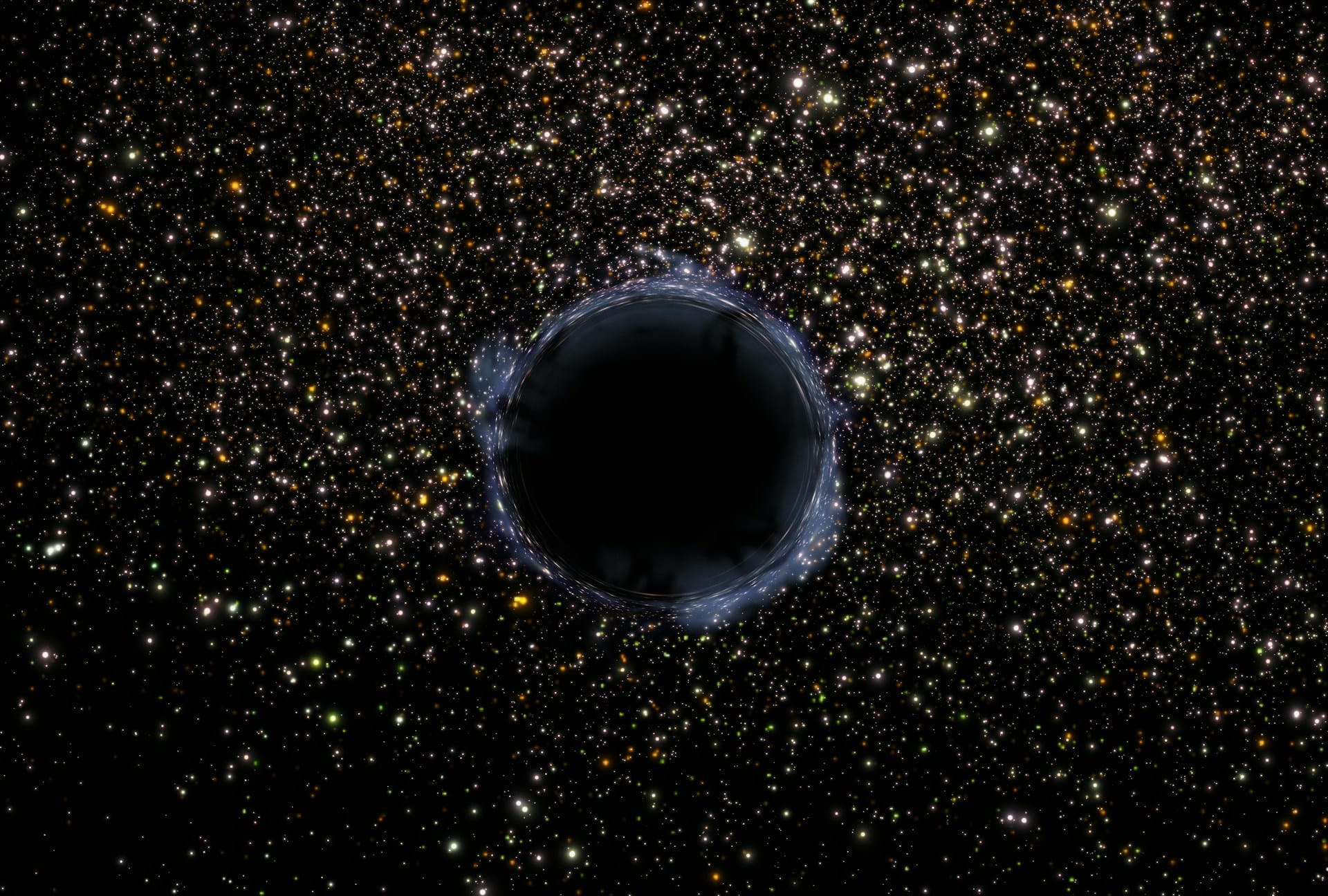
In their mind-blowing book Black Holes: The Key to Understanding the Universe, those six words are how Brian Cox and Jeff Forshaw choose to summarize the concept of spacetime—an unintuitive idea that challenges our ability to agree upon the passage of time and the distance between objects. It’s a powerful phrase, reducing byzantine theoretical physics into a base unit that we all participate in creating. Experience is how we observe spacetime. It’s reality. Events are what make up experience, so that’s how we measure it. Your life can be a yardstick in the theory of general relativity.
By defining the basic unit of experience, the authors created a wormhole between theoretical physics and everyday life. As soon as I read that short sentence, I understood that the raw material of infinity included me, and the way to mark it was as simple as clapping my hands, sipping my coffee, or typing these words. From a science learning perspective it was a revelation, but what excited me even more was the rhetorical backflip Cox and Forshaw landed. They managed to make a shortcut for understanding one of the most intimidating concepts in human history.
Not to get all deterministic, but the same web of spacetime events that led me to read a book about black holes also resulted in an ongoing conflict between the proponents of generative artificial intelligence and artists. The AI evangelists are trying to get people to adopt predictive algorithms trained on stolen artworks as a creative tool, and artists are largely rejecting that practice as an abomination. While some of this conflict is no doubt sustained in bad faith, an optimistic part of me wonders if maybe we’re just missing a Cox-Forshawian common language describing the stuff we’re fighting over. And if that hope is misinformed, then maybe if we had an atomic unit for creativity, we could at least clarify the terms of the current machine war.

The Spacetime of Art
Creativity is the spacetime of art. It is the ever warping medium through which artists contribute to the universe of writing, painting, sculpture, photography, film, theatre, dance, music, fashion, and the countless galaxies of interdisciplinary and transmedia objects and expressions. Just like the physics of general relativity, professional creativity is a labyrinth of abstraction, practically impossible to purposefully navigate without expertise. But there’s a shortcut. Creativity can make sense as long as you understand the common building block across all disciplines: choice.
As a writer I choose the thoughts I want to express and the genre, tone, and mood I’ll use to communicate these ideas. I choose every word, every punctuation mark and paragraph break—and whether to be parenthetical with an em-dash (or with brackets). I choose to collaborate with others if I want to make choices together, and if I need help with a choice I turn to an editor or advisor. I choose when to revise a draft, which will require more choices, and I choose when to publish a finished work. Choice after choice after choice. Then: art.
Before I was an author I was a theatre artist, and my plays and performances were built out of similar kinds of essential material. As an actor and performer I chose the tactics behind scripted words and actions. As a director I chose blocking and how to communicate with collaborators. As a playwright I made all the same choices I make now when I write books, but confined to the medium of motion and speech. I even participated in experimental movement-based theatre, which sublimated choice to a nearly reflexive act. The choice to touch an eyebrow, the choice to swing a leg, the choice to stand still.
My wife is a fine artist and her work is made of choices, too. Between us, we are privileged to know artists working in just about any medium with a name. And if you put their work under an electron microscope you see it: a structure made of choices. Decisions crystalized into an event, marking history with humanity.

The Consumer Machine
Choice is being fenced off by billionaire-owned companies and their evangelists. In the name of automation, corporate productivity, and the computer chip market, software is being forced into the devices we’ve come to depend on for communication and creation that chooses for us. Word processors and email text fields tell us what vocabulary to use and where to put our commas. The pictures you take with your phone are automatically adjusted before you even see them on your screen. Your selfie isn’t really yourself. Your words aren’t really your words. Your ideas are fed to you. The aforementioned rise of consumer grade generative AI has accelerated this problem.
In case you don’t know, generative AI is a cloud-based software anyone can access from a personal computer or smartphone. It writes sentences and draws pictures on command, based on user prompts. Describe a picture and it will print one. Tell it to write a manuscript and it spits one out, letter by letter. It can code, too. And animate. All you have to do is ask and watch it make the choices for you.
To the tired artist, or the creator who seeks to generate output for attention instead of expression, automated choice seems appealing. Last week, two Canadian authors published opinion pieces in major outlets insisting that writers have already widely adopted the technology. Building something from an atomic level is daunting. Why not explain what you want to make to a machine that will make most of it for you, then fine tune it and put your name on it? There is a product at the end, and isn’t that enough? What is an artist if not the body of their work?
The answers are simple. It is not enough and it is not your body of work. Prompting a predictive software to give you output that you polish and curate is the behaviour of a consumer, not a creator. Never mind that the computer generated material is a collage of stolen work from artists that have made choices before you, even if the AI output was entirely original, the bulk of the work was made without new human decision. The AI-using artist forfeits their status as creator and becomes a buyer. They stand in front of the vending machine, pay it money and push some buttons, then put their name on the trinkets they wish they made.
The Wiebe Doctrine
When asked for professional advice, Halifax-based painter Mitchell Wiebe once told a university class visiting his studio: “You don’t have to be an artist.”
I wasn’t even there when it happened—I heard it second hand—but this remains the most profound statement I have ever heard about taking the creative path. The first choice every artist must make before any other is to continue being an artist. No one is making you do this and the rewards for doing so are barely tangible. For me, this becomes more apparent as I continue to make the choice to create and I see other folks decide they are done spending all of their time and energy making choices fewer and fewer people seem to care about. No more making; time to receive the art along with everyone else. And that’s still an important role, too. The audience activates and completes art created by the artist. What we make must be observed. But consumption is not creation.
It’s no secret that creative success is a combination of luck, learning, and perseverance. But it’s the obvious things that sometimes need to be underlined so we don’t forget them. Every day you choose to be an artist is another day that you are an artist. You have marked the infinite fabric of reality with your intention to express, choice after choice after choice. Painting the fabric of spacetime with creative events.
PETER COUNTER is a culture critic writing about television, video games, film, music, and technology. He is the author of Be Scared of Everything: Horror Essays and How to Restore a Timeline: On Violence and Memory.
TEST OBITUARY is a journal where he explores unfinished ideas about culture and shares it with you. If you would like to contact Peter about anything you can follow him on Bluesky or email: contemplatethevoid@gmail.com